
Floor · Wall · Shower · Feature
Bathroom tiles.
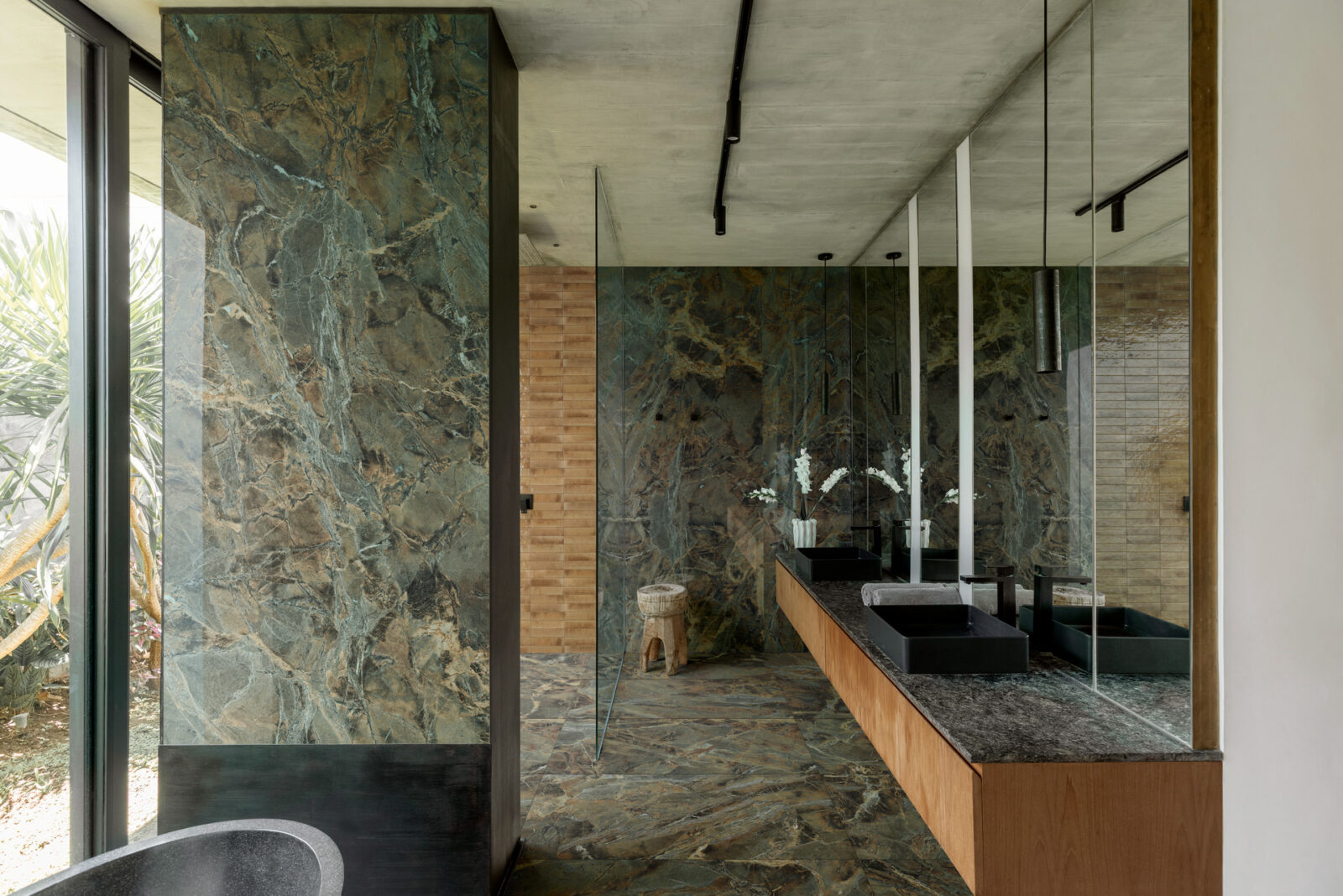
The bathroom is where tile matters most. Marble-look porcelain that looks like stone without the maintenance. Travertine warmth for the spa bathroom. Zellige character for the feature wall. Every style, every format — curated for Australian bathrooms.
Marble-look porcelain
266 styles

Marble Calacatta Extra Lux Polished Grande Slab
Marble Calacatta Extra Satin Grande Slab

Marble Golden White Satin Grande Slab

Marble Sodalite Blu Bookmatch “A” Lux Polished Grande Slab

Marble Sodalite Blu Bookmatch “B” Lux Polished Grande Slab

Marble Capraia “A” Lux Polished Grande Slab
Marble Capraia “B” Lux Polished Grande Slab

Marble Verde Aver Lux Polished Grande Slab

Marble Brera Grey Satin Grande Slab

Marble Altissimo Satin Grande Slab

Marble Statuario Lux Polished Grande Slab

Marble Elegant Black Satin Grande Slab
Travertine-look & natural
27 styles

Fondovalle Stone Lab Travertino Bianco 3D Honed Texture Slab (Mesh)

Travertino Romano

Travertino Argento

Travertino Reale

Travertino Argento
Travertino Dorato
Travertino Dorato

Travertino Chiaro

Argento Perla Travertine

Travertino Vaticano

Travertino Argento

Paris Travertine Romano
Zellige & handmade ceramic
53 colourways

Zellige Atlas Petrole Square

Zellige Beige Clear Square

Zellige Bleu Fonce`e Square

Zellige Bleu Jean Square

Zellige Caramel Square

Zellige Ecru Square

Zellige Emerald Square

Zellige Gris Rose Fonce`e Square
Mosaic & geometric
354 styles

Herringbone Carrara Glazed Porcelain

Spina Statuario

Ventaglio Statuario

.8 Herringbone Large Carrara White

Large Hexagon Carrara Honed Marble Mosaics

Hexagon Marquina Honed Marble Mosaic

Squama Carrara

Herringbone Statuario Mesh
Choosing bathroom tiles
Floor vs wall tiles.Bathroom floor tiles need a minimum R10 slip rating in wet areas — check the product spec before ordering. Wall tiles don't require a slip rating but need to be moisture-resistant. Most rectified porcelain works for both applications.
Large format or small format? Large format tiles (600×1200, 800×800) make a small bathroom feel more spacious — fewer grout lines, continuous surface. Small format tiles (mosaic, zellige, subway) add visual texture and work well as feature walls or shower nibs.
Marble-look porcelain vs real stone. Porcelain requires no sealing, is stain-resistant, and cheaper per m². Natural stone has unmatched depth and character but requires sealing annually in wet areas. Most AU bathrooms use porcelain for floors and may use stone for a feature wall or shower nib.
Grout selection. Bathroom grout needs to be epoxy-based or cement-based with sealer in shower areas. Grout colour dramatically affects the finished look — a lighter grout emphasises tile pattern; a matching grout disappears. Order a grout sample alongside your tile.
Planning your bathroom tiling
How much tile do I need? Measure the floor area (length × width in metres) and wall areas separately. Add 10% wastage for straight lay, 15% for diagonal or herringbone. If tiling a full bathroom (floor + all walls), a 3×3m bathroom typically needs 15–20m² of tile.
Rectified vs non-rectified. Rectified tiles are precisely cut to size — they allow tight 1–2mm grout joints for a clean, contemporary look. Non-rectified tiles have minor size variation and need wider joints (3–5mm). Most quality porcelain is rectified.
Always order samples first. Bathroom lighting (often artificial) reads tile colour and sheen differently from any other room. Order samples and hold them against your existing fittings and cabinetry before committing to a full order.
Need a quote? Talk to a tile expert →
Bathroom tile questions
What slip rating do I need for bathroom floor tiles?
In Australia, bathroom floor tiles in wet areas (shower floors, bath surrounds) require a minimum R10 slip rating. Dry bathroom floors (vanity area) require R9. Always check the product data sheet before ordering — this is listed on every product page.
Can I use the same tile on the floor and wall in a bathroom?
Yes — using a consistent tile on both floor and wall creates a seamless, spa-like look. However, make sure the tile is slip-rated for the floor if it's a wet area. Many 600×600 and 600×1200 porcelain tiles are rated for both applications.
What size tile makes a small bathroom look bigger?
Larger format tiles with fewer grout lines create the illusion of more space. 600×1200 or 800×800 tiles on both floor and walls in a consistent colour is the most effective approach. Avoid very small tiles in a small bathroom — they create a visual busyness that emphasises the room's size.
How much extra tile should I order for wastage?
Order 10% extra for straight lay in a bathroom. If you're doing a diagonal lay, herringbone, or cutting around a lot of fixtures (bath, shower base, vanity), allow 15%. It's always better to have spare tiles from the same batch — reordering later may produce colour variation.
Do I need to seal natural stone bathroom tiles?
Yes. Natural stone (travertine, marble, limestone) must be sealed before grouting and again annually in wet areas. A quality penetrating sealer protects against water, soap scum, and mould. Porcelain tiles never need sealing — this is one of the key advantages of porcelain over stone in bathrooms.
Extending the same look outdoors?
Outdoor pavers →